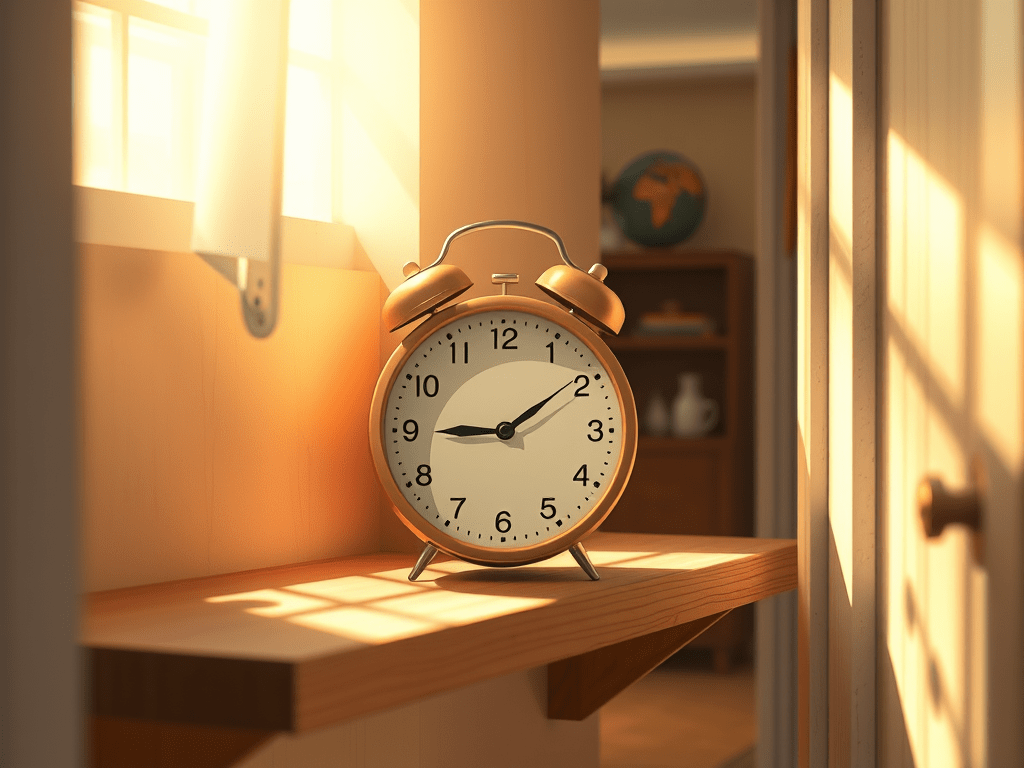
On a wooden shelf in the hallway, just outside the parents’ bedroom, lived a small clock named Tickle.
Tickle was round, with a pale face and gentle hands that moved as if afraid to disturb the air. He lived among many other clocks throughout the house—tall clocks in the living room, sharp digital ones on nightstands, a grandfather clock downstairs whose deep chime made the floorboards hum.
Each one kept perfect time.
Tickle did not.
No matter how carefully he counted seconds, no matter how he willed his hands forward, Tickle was always three minutes and forty-two seconds behind.
Every morning, the household alarms shrieked at 6:30.
Tickle’s chime came at 6:33, soft and apologetic, ringing into an already-rushing hallway.
He knew what happened on chaotic mornings.
Marcus’s mother burned the toast while hurrying past him toward the kitchen. His father snapped at traffic after glancing at Tickle in frustration. Marcus stumbled down the hallway half-asleep, his shoes untied, his breakfast forgotten. The morning scattered into chaos, and Tickle watched from his shelf, certain he made everything worse.
“If I just tried harder,” Tickle whispered to the darkness.
But his hands refused to hurry. They moved with stubborn gentleness, as if time were something fragile.
One Tuesday, Marcus’s father paused in the hallway, staring at Tickle.
“This clock’s useless,” he muttered. “Always wrong.”
Tickle’s heart—if clocks have hearts—sank.
That night, Marcus stopped in the hallway on his way to bed and looked at Tickle closely.
“You’re not useless,” the boy said quietly. “You’re just different.”
But different felt the same as wrong.
The next morning began like all the others.
The bedroom alarms screamed. The living room clock buzzed. The grandfather clock rang its deep, impatient gong.
The house jolted awake—sharp, urgent, frantic.
Marcus’s parents stumbled into the hallway, already rushing.
Then, three minutes and forty-two seconds later, Tickle chimed.
Not loudly. Not demandingly. Just a soft, patient sound, like someone gently clearing their throat.
Marcus’s mother had been rushing toward the kitchen, her mind already racing through the morning’s tasks.
She paused mid-step.
Something about that second chime—delayed, unhurried—made her stop in the hallway. She took a breath. The kitchen could wait three seconds more.
She walked instead of rushed.
Marcus’s father, halfway down the stairs, heard Tickle’s gentle chime behind him.
He stopped.
He checked his watch. He had time. Why was he running?
He turned back, kissed his wife in the hallway, called up to Marcus with warmth instead of urgency.
Marcus came down the stairs slowly, carefully. He tied his shoes. He remembered his backpack. He even smiled at Tickle as he passed.
Breakfast lasted twelve minutes instead of five.
No one said much. But the quiet felt different—less like absence, more like presence.
It happened again the next day.
And the day after that.
The other alarms still rang sharply, urgently, pulling everyone toward the day’s demands. But each morning, as the family moved through the hallway, Tickle’s chime—always late, always gentle—seemed to whisper: You have time. You have enough time.
They passed him on the way to the kitchen. They heard him when leaving bedrooms. They glanced at him a dozen times each morning.
And slowly, something shifted.
Mornings stretched. Voices softened. The house began to breathe.
Marcus’s mother stopped burning toast. She’d pause in the hallway after Tickle’s chime, take one deep breath, then continue to the kitchen with steadier hands.
Marcus’s father began leaving for work five minutes later—not because he had to, but because he wanted breakfast to last.
Marcus stopped dreading mornings. The hallway felt gentler somehow, and Tickle’s chime had become the sound that meant: You’re okay. There’s time.
Marcus noticed first.
“Mom doesn’t yell anymore,” he told Tickle one evening, stopping in the hallway on his way to brush his teeth. “And Dad laughs now. In the morning. That’s new.”
Tickle listened.
“I think,” Marcus said slowly, “it’s because of you.”
Tickle didn’t understand. He was late. He was wrong. How could wrong be good?
But he watched, and he noticed.
On mornings when his chime came last, the family paused in the hallway. They looked at each other. They remembered something the sharp alarms made them forget.
One night, the tall living room clock spoke to him in the darkness.
“You know they’re happier now,” it said. Its voice was not unkind.
“But I’m late,” Tickle said. “I slow them down.”
“Do you?” the tall clock asked. “Or do you remind them what they’re rushing toward?”
Tickle had no answer.
The tall clock continued. “We push them forward. You call them back. Maybe they need both.”
Not every morning was peaceful.
There were still days when Marcus’s father had early meetings and couldn’t linger. Days when his mother needed everyone out the door quickly.
On those mornings, they’d rush past Tickle without pausing, and he’d worry again.
But he noticed something: they didn’t resent him anymore. They adjusted. They planned. They set their alarms earlier when necessary.
And on the mornings when they didn’t need to rush—on Saturdays, on holidays, on slow Tuesdays—Tickle’s gentle chime in the hallway was a gift they’d learned to unwrap.
They’d pause. They’d breathe. They’d look at each other with softer eyes.
One evening, Marcus’s father stopped in the hallway, looking at Tickle.
Tickle braced himself.
“I thought about replacing you,” the man said quietly. “Getting a clock that worked right.”
Tickle’s hands trembled.
“But then I realized—you do work right. Just not the way I expected.”
He reached out and adjusted Tickle slightly on the shelf, centering him.
“Thank you,” he said.
And continued down the hallway.
That night, Tickle stopped trying to change his hands.
He let them move exactly as they wanted—steady, patient, kind.
He understood now.
The other clocks measured time.
Tickle measured something else.
He measured the breath between heartbeats. The pause before speaking. The moment when rushing stops and presence begins.
He wasn’t late.
He was a reminder.
From then on, when Tickle chimed each morning—three minutes and forty-two seconds behind the others—he no longer felt ashamed.
He felt necessary.
Because time doesn’t always need to hurry.
Sometimes the most important moments are the ones we almost miss.
Sometimes being late isn’t wrong.
Sometimes it’s the gentlest way of saying: Slow down. You’re already where you need to be.
And every morning, as the family passed through the hallway—toward the kitchen, toward the day, toward whatever waited—they heard Tickle’s patient chime.
And they paused.
Just for a moment.
Just long enough to remember.
 WonderWhisper
Leave a comment